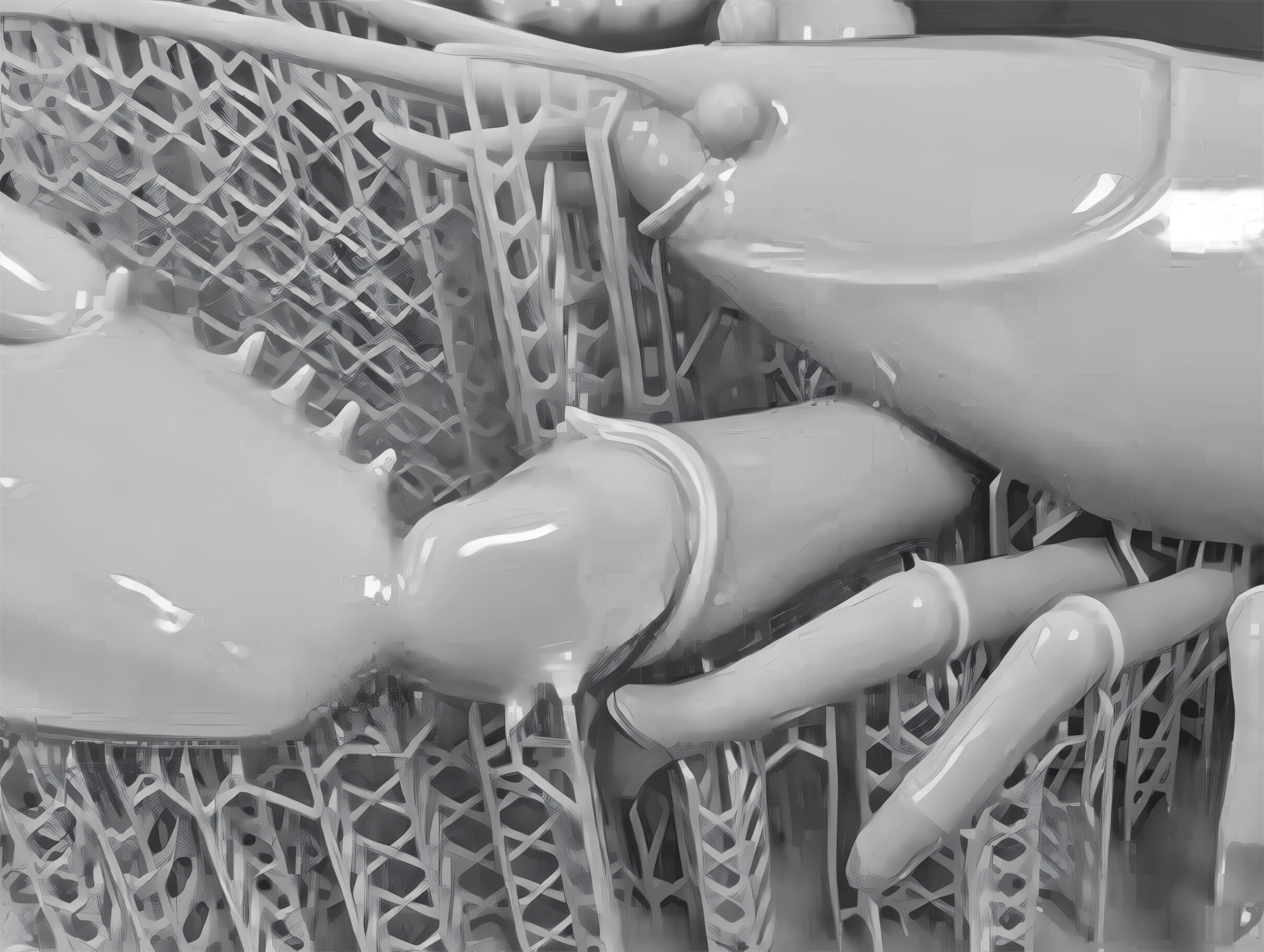
prototype manufacturing

image de notre atelier protypage, avec une machine d'impression 3D

Establishment of a prototyping service

This new service aims to :

  • Optimizing project development
  • Quickly validate concepts
  • Reduce risks before production

Mechanical spare parts can also be produced.

What is stereolithography?

Stereolithography (SLA) is a 3D printing technique that uses UV light to solidify a photosensitive liquid resin layer by layer.

  • An LCD screen acts as a mask, allowing UV light only to pass through the resin tray to the areas to be cured.
  • The resin hardens on contact with UV light on localized areas (it polymerizes).
  • Once the layer is complete, the platform rises slightly and a new layer of resin is solidified.
  • This process is repeated until the object is complete.

Type of parts :

  • Prototype parts: Prototype parts designed in CAD by the design department. This stage validates the design and allows you to visualize your product in 3 dimensions before it goes into production.
  • Mechanical / technical parts: Production of complex parts with high precision and mechanical strength.
  • Soft parts: Production of soft/flexible parts, enabling us to simulate the behavior of certain soft materials.
  • Prototype mold: Rapid production of small prototype molds capable of producing a limited number of parts, particularly for thermoforming trials.

Resin types :

  • Standard resin: For low-cost printing of standard parts. Several colors available.
  • Resin clear: For parts requiring a transparent appearance and excellent visual clarity.
  • Technical resin: For printing parts requiring good mechanical properties and temperature resistance.
  • Flexible resin: For parts requiring flexibility, able to deform without breaking.

For further information

The Gender Equality Index was established by the Law on the Freedom to Choose One’s Career Future. It is a tool designed to calculate the pay gap between men and women.
This index allows companies to assess the level of gender equality out of 100 points. It is calculated based on the following criteria:

  • Gap in pay between women and men
  • Gap in individual pay raise rates
  • Number of female employees receiving raises following maternity leave
  • Parity among the 10 highest paid employees
  • Gap in promotion rates

The VELFOR Group has calculated its Gender Equality Index. For 2024, it stands at 92/100:

  • Pay gap indicator: 37 points out of 40
  • Individual pay increase rate gap indicator: 35 out of 35
  • Return from maternity leave indicator: 15 out of 15
  • High pay indicator: 5 out of 10